
Creative Mental Healthcare
Through art therapy, growth and healing are a true work of heart
The use of art in therapy has reshaped the landscape of mental healthcare, allowing clients a path to healing through creative expression rather than solely through conversation. In private clinics, community agencies, and school settings, trained practitioners provide supportive spaces for people to make and interpret art of various genres as a means of accessing and regulating their emotions, gaining increased self-awareness, processing trauma and grief, navigating anxiety and depression, and more.
While art can be integrated into various therapeutic modalities, art therapy in and of itself is an “evidence-based [form of therapy] that allows clients to tap into the brain and body,” said Lauren Raney, LCPC, ATR, a registered art therapist and the owner of Hope Forest Therapeutic Art Studio in Glen Ellyn. Raney, who provides in-person and virtual therapy to both children and adults, added, “We can learn a lot through how we react to art.”
Raney provided clarity in response to some common misconceptions about art therapy. For example, while “people often think art therapy is only for children, it’s for anyone across the lifespan,” she said.
Children often benefit from art therapy because it allows them to express visually what “they may not have language for yet,” Raney explained. Meanwhile, for older clients, “art can help them reach another level of communication and look at their emotions and experiences, literally, from a different perspective.”
She also explained that some people initially disregard art therapy as a treatment option because they believe having artistic talent is necessary to benefit from it. However, that’s not at all the case. Raney said, “What’s beautiful about art therapy is that it’s not about the product but about the process and how the client feels going through the process.”
Art therapy meets clients where they are and is approached “from the client’s perspective,” Raney explained. During her intake sessions, she inquires about clients’ preferred starting medium. “Maybe they sketch in a sketchbook already, or maybe woodworking is their thing,” she said.
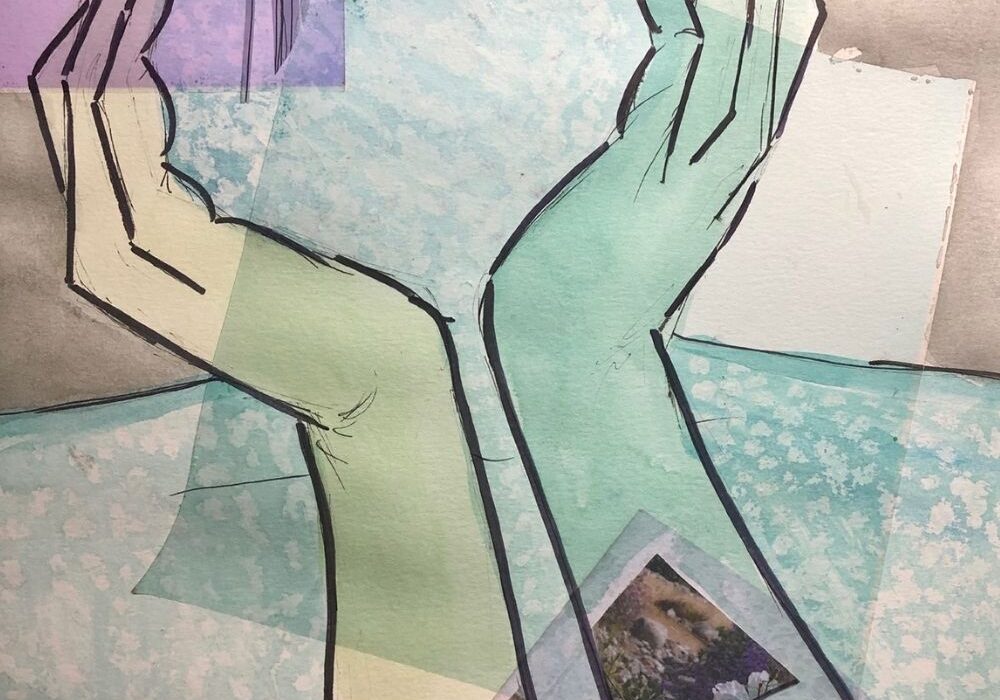
For clients who do not already engage in a particular mode of art, “it’s often safest to start with classic [two-dimensional] drawing,” Raney noted, but she works with clients through clay, collage, and various other artistic modes. “The art realm can really be anything – makeup, nail design, cooking, gardening, music,” Raney said. “There is a wide range of what we can label as creative in the therapeutic space.”
Art therapy is not one size fits all. Some clients want music on in the background as they create, while others prefer silence. Some opt to make art during their therapy sessions, and others create on their own time then bring their art to session to process.
Raney said most clients who create during their therapy sessions will let her know when they are “at a stopping point and will verbalize” what they are noticing and feeling. However, she will also “bring in observations and questions” as they create.
It is also typical for Raney to make art alongside her clients, “even if it’s just doodling,” she said, “so [she is] not just staring at the clients while they create.”
Raney, like many other therapists, offers free consultations to prospective clients. She encourages people considering art therapy, or any other type of therapy, to reach out to various providers until they find one with whom they “find authentic human connection.”